
Online

A licensed professional engineer (PE) is defined as an individual who has successfully fulfilled all necessary education, experience and examination criteria set forth by regulatory bodies to be recognized as such. This designation signifies an exceptional level of expertise and ethical practice within the engineering profession. Australian engineers interested in becoming licensed professional engineers typically must obtain an accredited engineering qualification, acquire relevant work experience under supervision, demonstrate professional competency through exams or exams necessary for registration with appropriate authorities, apply for registration with these authorities, and engage in ongoing professional development activities. Note that requirements vary by state/territory, so it’s wise to contact each engineering registration board directly regarding the exact steps and criteria needed for licensing as a professional engineer.

This blog will cover all aspects of licensure, from studying requirements and practical experience requirements through exams. We’ll also delve into state-specific licensure processes so you’re fully informed about each step in your journey.
As becoming a licensed professional engineer is more than simply fulfilling tasks, this guide offers more than information – it contains helpful tips, expert advice, and real-life experiences to support and guide you as you make your way toward becoming one.
Professional engineers are defined as individuals who have successfully met all education, experience and examination criteria outlined by their licensing board or regulatory body, such as Engineers Australia in their region.
Professional engineers hold degrees from accredited universities, have completed relevant work experience under the supervision of licensed engineers, and have passed the PE exam successfully. Their primary responsibility lies in designing, analyzing, and implementing engineering projects that meet industry standards, codes, and regulations.
Professional engineers play a vital role in society, impacting public safety, health, and well-being. Their influence extends across various engineering disciplines including Civil, Mechanical, Electrical, Chemical and even Nuclear.
Professional Engineer (PE) licensure is an integral component of an engineer’s career; it legally recognizes their competency and expertise. A PE license gives engineers the authority to independently sign and seal engineering documents – lawfully becoming responsible for their designs’ safety and accuracy.
PE licensure highlights an engineer’s level of responsibility to safeguard public well-being while adhering to ethical and professional standards. PE licensure also opens doors to career advancement, as many engineering roles in the public sector or those requiring government contracts require licensed PEs. Furthermore, holding such a license may result in higher earnings potential and greater credibility with peers and clients.
Legal Requirement: In many jurisdictions, only licensed Professional Engineers are allowed to offer engineering services to the public, sign and seal engineering plans and drawings, oversee engineering projects, or offer engineering expertise for hire. Licensure may even be legally mandated in order to practice engineering effectively while protecting public health, safety, and welfare.
Maintaining a PE license typically involves participating in continuing education and professional development activities to remain informed on advancements in their field. Engaging in lifelong learning activities ensures licensed engineers remain competent when practicing engineering.
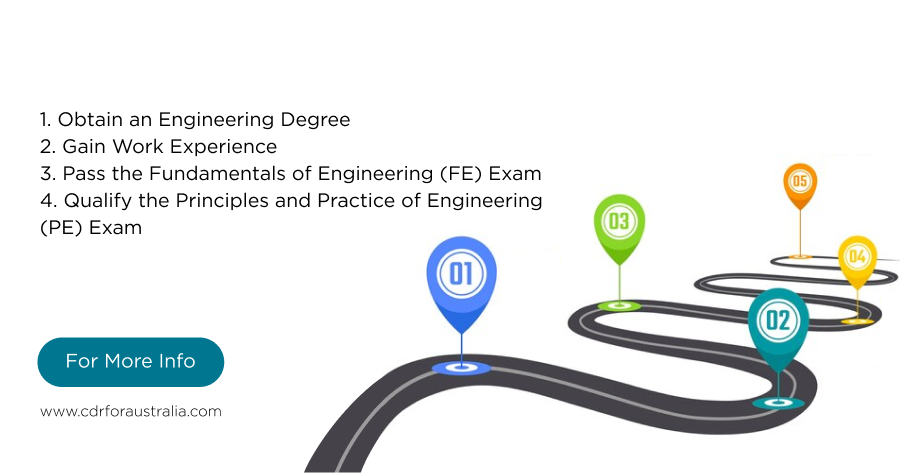
Attaining licensure as a Professional Engineer generally involves the following:
Ongoing professional development activities must also be pursued to maintain licensure.
Becoming a professional engineer typically involves earning a Bachelor’s degree in engineering or related discipline from an accredited university, with your choice of discipline largely depending on your interests and desired career goals. An engineering degree typically lasts four years of study and includes both theoretical coursework and laboratory experiences.
After earning their engineering degrees, those hoping to become professional engineers must accumulate several years of work experience under the supervision of an already licensed engineer.
Work experience requirements depend on your region and licensing authority; typically, two to four years is generally required to become an engineer. During this period, engineers put their theoretical knowledge into action on real-world engineering projects while honing practical skills that will make them invaluable members of their profession.
Work experience is an integral component of licensure for engineers, as it provides them with exposure to various engineering challenges, helps hone problem-solving abilities, and develops an appreciation of project management and client interactions.
The PE exam, administered by the Department of Home Affairs, assesses an engineer’s knowledge and competence within their chosen engineering discipline. It represents an essential step in the licensure process and typically comprises both morning and afternoon sessions.
Exam content focuses on engineering principles and practices specific to one engineering discipline. Therefore, preparation is key for passing this exam successfully.
Engineers invest time and effort into studying key concepts and exam topics, reviewing course materials such as review courses and practice exams to maximize preparation for exams as well as familiarize candidates with exam formats.
Engineers must register and register their PE exam with the relevant licensing board or regulatory body. Exams are administered throughout the year at various locations; candidates should plan and select an exam date that coincides with their preparation timeline.
To become a licensed professional engineer in Australia, you typically need to follow a structured process. Here are the general steps involved:
The procedure for taking the Professional Engineer exam varies based on which licensing board or organization oversees it; however, in general, the process usually includes these steps:
The PE exam is a standardized examination designed to test an engineer’s skill at applying engineering principles in real-world situations. It covers an array of topics related to their chosen engineering discipline. Exam formats vary between disciplines but generally consist of breadth and depth sections.
Breadth covers general engineering principles, while depth explores specific topics within their chosen engineering discipline. Candidates have an opportunity to showcase their technical knowledge and demonstrate expertise during depth exams.
PE exam pass rates depend on both engineering disciplines and regions in which exams are taken, with higher pass rates typically seen in more challenging disciplines and areas. Due diligence in preparation is essential in increasing your odds of passing; with careful study candidates can increase their chance of passing.
Engineers often invest in review courses and study materials designed to increase their chances of passing the PE exam, such as exam review courses and materials. These resources help candidates refresh essential concepts, practice problem-solving, and become familiar with the exam format.
Working through sample problems and practice exams allows candidates to develop confidence in themselves as well as identify areas that require further study.
Successful PE exam takers emphasize the significance of time management during an exam, remaining calm and focused while attending to details in problem-solving. To quickly locate information, it is necessary to be familiar with any reference materials allowed during testing as well as their content.
Engineers may apply for a PE license after successfully passing the PE exam and meeting work experience requirements, which vary by region and are established by licensing boards or regulatory authorities. To get their PE license, engineers typically need to apply, provide proof of education and work experience, pay any applicable fees, and submit supporting documentation.
Engineers residing in various regions and countries must abide by the requirements and guidelines established by their licensing board or regulatory authority in order to become licensed PE professionals.
As an example, in the US, each state has its licensing board, and engineers must apply for their PE license in their intended practice state. Some states offer reciprocity agreements to permit licensed engineers in one state to obtain one without taking the PE exam again.
Professional engineers with PE licenses enjoy many advantages that a PE license can bring them, such as increased career opportunities and the ability to work independently while taking on higher responsibilities, higher earning potential, and enhanced professional credibility. Furthermore, these engineers may work on projects with significant social ramifications, such as infrastructure development or public safety initiatives.
Becoming a Licensed Professional Engineer (PE) in Australia is a structured process that involves obtaining an accredited engineering qualification, gaining relevant work experience, demonstrating professional competency, passing necessary exams, and applying for registration with the appropriate authorities. PE licensure is essential for legal compliance, enhancing credibility, career advancement, professional mobility, and ensuring responsibility and accountability in engineering practice. It signifies a commitment to ethical conduct, professionalism, and continuing professional development. Success in the PE exam is crucial for obtaining licensure, and thorough preparation and adherence to exam procedures are key to passing. Once licensed, engineers enjoy a range of benefits, including increased career opportunities, higher earning potential, and the ability to undertake projects with significant social impact. Ultimately, PE licensure is a hallmark of excellence and expertise within the engineering profession.
